Webcomic Review: Sticks Angelica, Folk Hero by Michael DeForge

Sticks Angelica, Folk HeroSticks Angelica, Folk Hero

by Michael DeForge

My rating: 4 of 5 stars

Though it was drawn in strips it felt like a complete story. Overall the writing was incredibly Canadian; and not just because it was set in Canada. It had that same quality of bizarre, whimsical and dark humour that I expect. I enjoyed this, looking forward to checking out DeForge’s less conventional works in the future.

Manga Review: Times Two by Shouko Akira

Times TwoTimes Two

by Shouko Akira

My rating: 3 of 5 stars

I’d read this before and didn’t remember it being so cute. Basically a series of 5 unconnected stories about the agony of falling in love in high school. I especially enjoyed the story “Second Impression”. There’s something about ESP in shoujo manga that I absolutely love. Maybe because it’s an easy way for one of the characters to really find out how the other feels and removes that annoying ‘trope’ of tension created through miscommunication. If you like innocent pure love shoujo, or are a fan of the authors other title, Monkey High, you should consider giving this a try.

Comic Book Review: Valerian by Pierre Christin and Jean-Claude Mézières

Valerian: The Complete Collection, Volume 1Valerian: The Complete Collection, Volume 1

by Pierre Christin and Jean-Claude Mézières 

My rating: 3 of 5 stars

I would definitely have gotten on better with this if I were still a child. As much as I appreciated the adventure, I found I was a bit bored. The story is a little too straight forward, and the text is too dense. Plus, I rarely get excited for sci-fi. The story/ideals feel somewhat modern (which was a nice surprise), and then art reminds you of when it was written. I did hear that the art improves over time. Overall, not a bad title, and it is certainly in the running for Christmas presents to my younger relatives.

Manga Review: GoGo Monster by Taiyo Matsumoto

DGRlZ_3UwAEnQa4

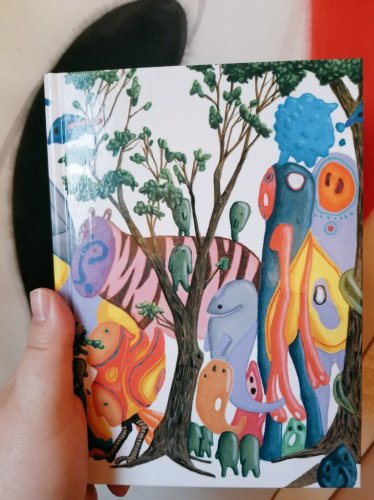
This is seriously one of the most beautiful manga publications in my collection. It has a full color cardboard sleeve, a full color wrap-around image, and the page edges are painted red with further designs. It’s gorgeous. And, for that alone, I think it’s worth collecting.

But, then you have the story… and “my god!” my brain feels like it’s melting. (that’s a good thing) Like most of Matsumoto’s works the protagonists are children working out their reality/trying to figure out their place in the world. It primarily surrounds two boys.

The first has been going to this school for a long time. He’s a loner. And has been ostracized by the entire class because of his strange behaviour and talk of the supernatural. His only friend is the school caretaker who listens quietly and intently in his stories, but rarely comments or encourages the behaviour. Throughout the story the boy begins to get agitated as the voices he’s been relying on have started to go quiet.

The second boy is new to the school. And as much as he’s been warned to stay away from the first boy, he finds his behaviour intriguing, if not bewildering, and makes friends with him. He also asks questions and listens to the stories, but is of course doubtful as to their validity.

DGRmue-UQAELy4yThe whole thing feels like a metaphor for growing up. There is constant concern over the other side, of adulthood, of breaking the rules, of death… all of these discussions between the characters seem to be markers of that pivotal moment in a child’s life when they’re no longer a child. They take a step into a limbo where they’re still children, but not children at the same time.

It’s a brilliant reading experience – delving deep into the psyche of children. But, I think is best understood intrinsically. I think if you’re trying to figure out what is going on during every panel, you’ll only wind yourself into knots.

DGRy7-lVwAAT-oh

Manga Review: Descending Stories, volume 1 / by Haruko Kumota

DGeQ-dKUIAAEvuuI’ve been pretty hyped to read this after hearing so many great things about the anime; many people touting this story as a “masterpiece”.
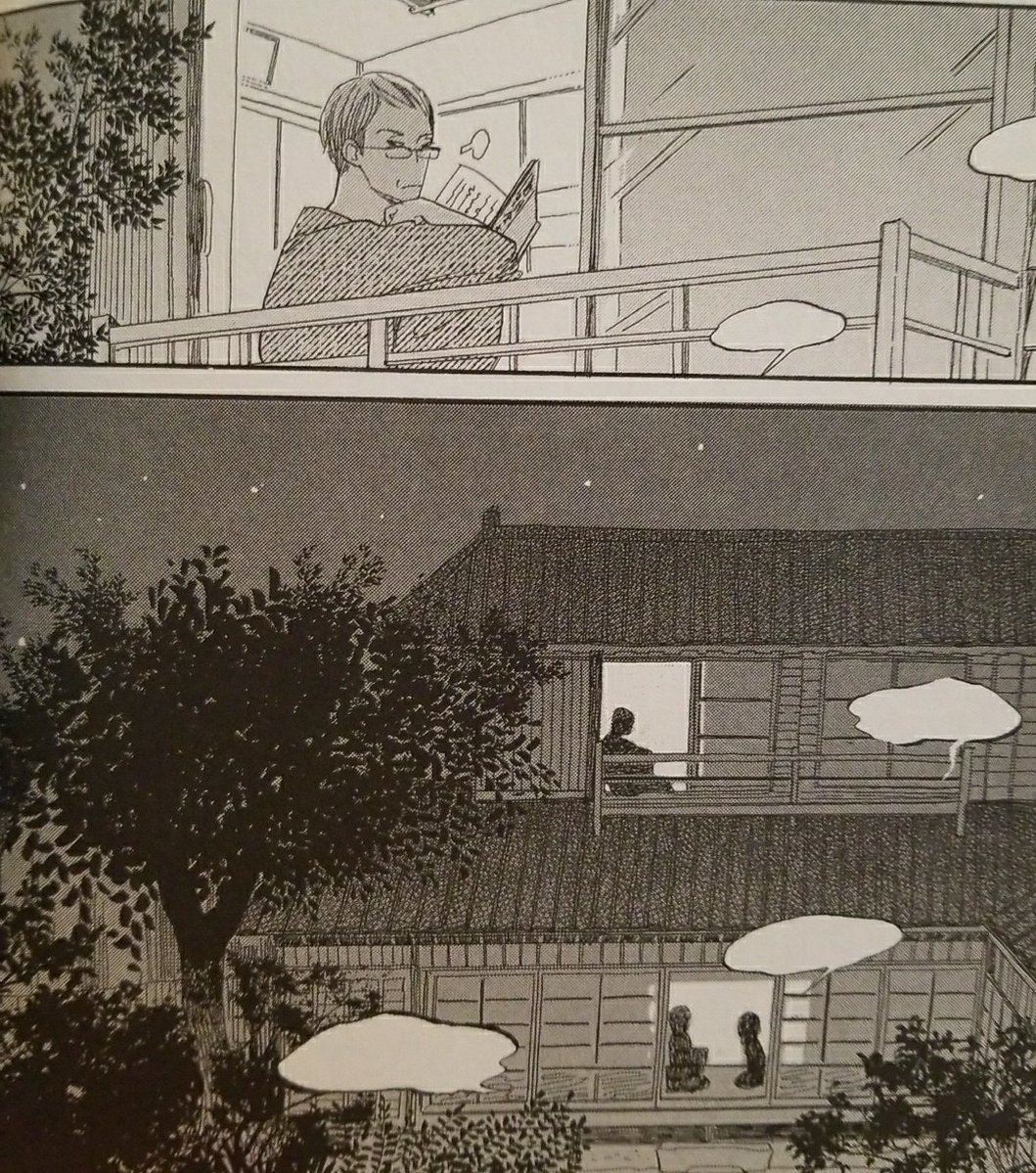
I’m less enthused after reading it than I was expecting. It has one major flaw in my eyes and that is it is written by a yaoi author. i.e. she brings with it a lack of character development. Because most yaoi series tend to be on the shorter side (at least what has been released here) authors have to develop their characters quickly. And they can do this because they are working with stock characters. The uke and seme are the most common character types complete with defining relationship roles, personality (both private and public), and even artistic design. If you’re a regular reader of the genre, you will instantly pick out which character belongs to which static character type and can enjoy the quick-ride which is the story.

But this is not yaoi (it might have some gay characters, but that doesn’t define the genre). So, it’s quick character development isn’t enough to engender an emotional response from readers. It falls flat. And this is my primary issue with this story.

It could make a recovery though. The way the story is structured could indicate that the two male character’s will get more focus throughout the story as Kumota unveils their intentions and feelings. But other characters, like the lead female character doesn’t have much left to give. Her character has been laid bare, and her intentions/motivations clear.

But the story! The story! The story could save this for me. It is one of the most unique subjects I’ve read about. It’s about a young man recently released from prison. While he was in prison he heard the comedic storytelling (rakugo) of the legendary master Yakumo Yurakutei and decided to become his apprentice. He persuades Yakumo to take him on, and is eager to get started to learn the art of rakugo.

This is the first time I’ve read anything about rakugo. I’ve had a little exposure to it through watching Japanese television. But, this purely Japanese art-form is fascinating to me to read about.

Now all Kumota needs is to develop her characters a bit more and this will be a great manga…I’ll wait!

DGeRpHxUwAAkNGG

Non-Fiction Review: Fluent Forever by Gabriel Wyner

Fluent Forever: How to Learn Any Language Fast and Never Forget ItFluent Forever: How to Learn Any Language Fast and Never Forget It

by Gabriel Wyner

My rating: 4 of 5 stars

It’s difficult to rate something like this without seeing if it works first. But, I do think that the author is at least giving you a very practical approach to self-language study… and he certainly doesn’t sugar-coat how much work it’s going to be. I’ve been stuck in my Japanese language study for a while — I think Gabriel Wyner’s approach might be the answer to get me out of this rut.

Also, I would highly recommend the audiobook of this to listen to while you read the book. He seriously has one of the prettiest narration voices. Plus, with so much discussion about foreign words and pronunciation, it is such a bonus to actually hear (rather than read and guess wrong) the words properly spoken. And, with how much he repeats his example words, my vocabulary is now 5-6 words larger.

Graphic Novel Review: Through the Woods by Emily Carroll

Through the WoodsThrough the Woods

by Emily Carroll

My rating: 3 of 5 stars

This is storytelling with the flavour of folk tales. There’s something under the surface that feels somewhat poetic, but also leaves the stories feeling somewhat incomplete. The incompleteness is magnified by the fact that the art is left to tell the ending in almost all of the stories. And as much as the art was beautiful it felt lacking as a finale.
The first story in this compilation was my favourite, and I became less enchanted with each subsequent tale. I think I was hoping of more of the first, with more of it’s quiet and unexplained creepiness rather than what turns into louder sillier stories by the end.
I’m currently on the fence as to whether I liked this or not. But, I’m certainly interested in picking up more titles by this author.

Graphic Novel Review: Tetris: The Games People Play by Box Brown

Tetris: The Games People PlayTetris: The Games People Play

by Box Brown

My rating: 2 of 5 stars

This was okay. My opinion of it might be suffering for the fact that I just read a corporate history graphic novel that I enjoyed exponentially more about a month ago. It was too easy to compare the two.

I enjoyed the story well enough. But there wasn’t very much story to be had. If you had taken the first 50 pages, the last 10 and thrown in a few in the middle for good measure, you would have had your story.

But, then there were all of the other pages. Filled with rights negotiations… It’s not that this wasn’t important or interesting. But, it was just written in a way that made more sense in a report. This wasn’t supposed to just be facts with pictures. This was supposed to say something. Make me feel something. Like a good story should.

It was like facts were acquired. They were calculated to amount to a certain value. And then spewed out in sequence without vetting or embellishment. There was story to be had. I don’t even think that the content that existed was bad. It’s just that it was the skeletal information that a good story could have been built upon.

Obviously. I felt like the story was missing.

The art satisfied the report-style writing. It was okay. Cute enough. There were a few times when I got confused which character I was reading about and had to flip back to the pages they were introduced to figure it out.

I really liked the yellow/black pallette. Usually a harsh combination, but I found rather fun.

Overall, this was a quick read. I finished it in about an hour. I thought this was interesting and informative, if lacking in finesse and feeling. If you’re interested in the history of Tetris, or maybe the history of business partnerships between foreign-countries and Russia you might enjoy picking this up.

Manga Review: We Were There, vol 1-16 / Yuuki Obata

We Were There, Vol. 1We Were There, Vol. 1

by Yuuki Obata

My rating: 3 of 5 stars

I read this series because I’d been recommended it so often, and also because I own the series, and I owe it to my money to read the manga I buy.

Unfortunately it’s not the series I had hoped it could be. Every time you were left with a hanging question about where the story would go, I predicted the outcome. It was NEVER the outcome I’d hoped for. The outcome was always convenient. Always expected. And never profound.

The characters are weak. I think this is the overall problem I have with the series. Not weak in character, but just weak characters. They weren’t developed enough — and their relationship wasn’t believable enough for me to buy into it. Actually I was thinking their relationship was more toxic than romantic, there were moments where I thought the author was aware of it too — but if she was, she certainly didn’t do anything about it!

The story itself is fine, if a little slow and predictable. The art in it is suitable (if occasionally inconsistent).

There was a surprise thrown into this series that made the beginning worth reading. It comes at the middle of the series, around volume 11. High school is over. Yano is gone. And, Nanami hasn’t seen him in 5 years.

It’s from this point onward that the series gets interesting. And it’s at this point onward that you get SOME of the much desired character development. I’m not going to say it’s a lot — and I’m not going to say it isn’t completely predictable, but I will say that you do start to have some feelings for Yano and Nanami as characters.

Unfortunately these feelings didn’t come soon enough. I’m a person who is normally easily moved. I felt stone cold-hearted reading to the end.

But, do I recommend this series?!

Maybe. I would say try the series. If you don’t buy into the characters relationship right at the beginning it’s probably not worth reading until the end. But, if you completely get behind Yano and Nanami’s relationship (if their love moves you), this will probably be one of the best shoujo dramas you’ll ever read!

It all boils down to the characters…