Novel Review: Strange Weather in Tokyo / by Hiromi Kawakami

strange weatherStrange Weather in Tokyo / by Hiromi Kawakami

Translated from the Japanese by Allison Markin Powell, ©2012

Published by Portobello Books, ©2014

Originally Published in Japan in 2001 under the title センセイの鞄 (Sensei no kaban) by Bungei Shunju, Tokyo

978-1-84627-510-4

Stars: ★★★★ / 5


From GoodReads:

Tsukiko is in her late 30s and living alone when one night she happens to meet one of her former high school teachers, ‘Sensei’, in a bar. He is at least thirty years her senior, retired and, she presumes, a widower. After this initial encounter, the pair continue to meet occasionally to share food and drink sake, and as the seasons pass – from spring cherry blossom to autumnal mushrooms – Tsukiko and Sensei come to develop a hesitant intimacy which tilts awkwardly and poignantly into love. Continue reading

Manga Review: Flying Witch, Volume 1 by Chihiro Ishizuka

31172294Flying Witch, volume 1 by Chihiro Ishizuka

Translated by Melissa Tanaka

Published by Vertical Comics, ©2017

Originally Published in Bessatsu Shonen Magazine, Kodansha Ltd., ©2013-

978-1-945054-09-9 

Stars: ★★ / 5


Flying Witch is a slice-of-life shounen manga about a 15-year-old witch, Makoto Kowata, who has left her home (with her black cat familiar); as is the “right-of-passage” custom to become a fully-fledged witch (think Kiki’s Delivery Service). I loved the characters in this series – they are so fun, quirky and just like-able. I particularly love the way the characters react to Kowata upon learning she is a witch and even more so, Kowata’s naivety in adjusting to her new surroundings. I think a lot of people will really love this cute, calm, and cheerful slice-of-life manga.

BUT… there are some major issues with it for me.

Continue reading

Meta-Manga! Recommendations #MangaMonday

If you haven’t heard the term “meta-manga” before, it’s probably because I made it up. The modern use of the term/prefix “meta” generally refers to “x” about “x.” I am very familiar with this concept because I work closely with “meta-data” which is “data” about “data.” In the case of manga, a meta-manga would refer to “manga” about “manga.”

I LOVE meta-manga! There’s something so exciting about reading a manga that is completely self-aware. It’s a bit like watching a movie and waiting for that moment when someone actually speaks the line that is also the title of the movie. It’s a strange and fantastic moment.

There are SO MANY meta-manga to choose from. What manga-ka (manga author) wouldn’t want to write or illustrate something they know about as intimately as their own job? Here are some of my favourites:


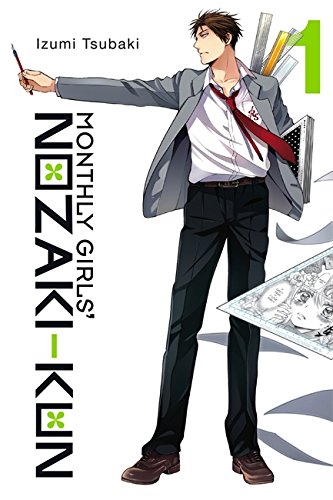
ONE. Monthly Girls’ Nozaki-Kun by Izumi Tsubaki.

51c7g+4RaAL

This is a shoujo 4-koma manga (4-panel comedy manga originally marketed to girls) about a high school student named Nozaki who draws shoujo manga for Monthly Girls’ Magazine.

It begins with his cute classmate confessing her love to him and Nozaki, being so completely clueless and unable to focus on anything but writing manga, thinks she is asking for an autograph – and later convinces her to help him work on the actual manga itself.

Throughout the series you meet many other quirkly classmates each with distinct personalities and each with a hidden link to Nozaki’s manga.

The 4-koma format is a little jarring to get used to, as the story doesn’t flow like regular manga. It is really based on a “punch-line” format… similar to say…”Foxtrot.” But, over time as you get used to the format, the flow, the comedy, the characters, it becomes more-and-more enjoyable.

If you’re not sure you’ll like reading the 4-koma format I would highly recommend watching the short anime adaptation of this BEFORE getting into it. Continue reading

Graphic Novel Review: Real Friends by Shannon Hale and LeUyen Pham

Follow my blog with Bloglovin
31145178A wonderful graphic autobiography for middle-grade readers by one of my favourite contemporary authors. Shannon Hale focuses on her early experiences making friends… from the ease of friendship as a pre-schooler, to the complicated social pecking order of grade school.

Shannon’s mother is convinced that everything will be all right if she just has 1 special friend. This friend is Adrienne. But as they grow older, Adrienne becomes friends with the popular “the group” and as they move from grade-to-grade Shannon must now traverse the treacherous landmines of what being associated with “the group” means.

This story deals with mental health (particularly anxiety), bullying, friendship, and even religion. But mostly, it is a common tale of growing up and making friends. I basically found myself nodding my head to just about every scenario… especially the sibling relationships.

The situations feel real to someone who had a relatively boring/happy childhood; they are so reminiscent to my own childhood it’s not even funny. It doesn’t feel preachy or didactic in any way. At least it didn’t feel that way to me. And, I loved the slightly ambiguous ending, a proper depiction of how someone “would” act in a situation, rather than how they “should” act.

LeUyen Pham’s art is bright, and youthful – and serves the story well. The storytelling is grounded in reality, but also fluid enough that you could easily forget this is a biography (if you wanted to).

I highly recommend this story to any child — and better yet, reading this with your child!

Graphic Novel Review: A Castle in England / by Jamie Rhodes

A Castle in EnglandA Castle in England by Jamie Rhodes
Illustrated by: Isaac Lenkiewicz, Briony May Smith, Will Exley, and Isabel Greenberg.
My rating: 2 of 5 stars

There is so much potential in this title, from the concept showcasing the history of the residences of a single castle (I love histories); the artist contributions (showcasing 5 different creators/whose styles matched beautifully the historical context they each represented); to the unusual peach and tan colour palette (which I actually thought was quite splendid). I was pretty excited about it — but it fell so very flat. Where could this have faltered?

The biggest detriment to this comic was the commission status of it: paid for by the National Trust and Arts Council England. A commissioned work where money issued furthers the idea of arts and history. This isn’t a bad thing, but in the context of comic books and graphic novels greatly affects the creation process and henceforth, the reading experience. It was not written for the public, but FOR its commissioners.

As a Canadian I often pick up comic books commissioned by the Canadian Arts Council. And this same sentiment holds true. But at least in these instances, they are telling the story of my country, and they are expressing it with a Canadian sensibility. These works are more innately understood when it is your own country paying for it. But this isn’t. It’s foreign to me. And any potential subtle “cultural-isms” are lost on me.

The reading experience of this is like a friend returning from vacation and I’m now stuck watching a slide show of the experience. Looking at a photo of people standing around. Having to listen to an explanation of what is happening not in the picture, but behind the camera. This is not a good time.

Each of the five stories that make up this book require extensive explanation to be understood. The illustration isn’t doing it’s job. One of the first questions I ask myself when I’m evaluating sequential art works is “If I take away the text, can I understand this?” The answer is a fervent “no”. And this work has FIVE sets of text: The family tree to start, a quote at the beginning of each story to set the mood, the text represented in the comic to give the characters speech, the brief history of the events to give context to the story, and the brief history of the family history currently residing at the castle to explain the action.

All but the family tree and quote at the beginning are essential to understanding this work. Remove any of the others, and this work crumbles into nonsensical gibberish.

If you think about it in the reverse… “If I take away the art, can I understand this?” The answer is definitely “yes”. But who would want to read the scant historical summary that remains?

There are so many good things about this comic, but the fact that the art requires instruction at this intense of a level is a problem.

And then… to rub salt in that wound…

The formatting of this text! Each story has the text handwritten in the style of the art/artist (wonderful). The histories unfortunately do not follow in the same style. Instead they are presented using a small textbook-like font on blank white pages (from a graphic novel stand point is incredibly boring to look at), each paragraph numbered (for no apparent reason but to perplex me greatly) with one small illustration from the preceding comic (for no apparent reason but to remind me that the summary has some relationship to the previous story). It just didn’t make sense, and didn’t match in the slightest the graphic portion of the work.

If you want to read a work that gets it right, I’d recommend going for 750 Years in Paris by Vincent Mahé instead.

Non-Fiction Review: Writing About Art by Henry M. Sayre

Writing About ArtWriting About Art

by Henry M. Sayre

My rating: 3 of 5 stars

As this was intended for beginner students of art history, I can’t say this was exactly for me. I’ve been wanting a refresher on how to approach art, think about, and examine art. Though this did give some hints in that area, it was more focussed on the essay writing process… and I would say not so much for the serious student of art history, but more for the student of art appreciation. I would never have gotten away with the ephemeral approach of writing an essay purely on observation and feelings. If you’re a new student take this guide with a grain of salt. Every professor you have will expect a different approach to art writing, down to the fine points of how to make references. It’s almost always better to start by asking your professors what their expectations are.

Manga Review: The Walking Man / by Jiro Taniguchi

The Walking ManThe Walking Man

by Jirō Taniguchi

My rating: 5 of 5 stars

The walking man encourages you to forget the pressures of life and enjoy every step of the journey; to appreciate every experience and meeting. This is less a story and more an expression of feelings told through beautifully rendered, compact illustrations. And, can we just appreciate Taniguchi’s mastery over screen tones…. this is how it should be done!

The only issues I had are with the publication: flipped pages were entirely unnecessary; and it would have been wonderful seeing some of the watercolour spreads printed in colour. Disappointing, but hardly deal breakers.

I have never felt more calm while reading a manga. I loved this. I would recommend reading this outdoors on a comfortably warm Summer evening as far from city noises as possible.

Webcomic Review: Sticks Angelica, Folk Hero by Michael DeForge

Sticks Angelica, Folk HeroSticks Angelica, Folk Hero

by Michael DeForge

My rating: 4 of 5 stars

Though it was drawn in strips it felt like a complete story. Overall the writing was incredibly Canadian; and not just because it was set in Canada. It had that same quality of bizarre, whimsical and dark humour that I expect. I enjoyed this, looking forward to checking out DeForge’s less conventional works in the future.

Manga Review: Times Two by Shouko Akira

Times TwoTimes Two

by Shouko Akira

My rating: 3 of 5 stars

I’d read this before and didn’t remember it being so cute. Basically a series of 5 unconnected stories about the agony of falling in love in high school. I especially enjoyed the story “Second Impression”. There’s something about ESP in shoujo manga that I absolutely love. Maybe because it’s an easy way for one of the characters to really find out how the other feels and removes that annoying ‘trope’ of tension created through miscommunication. If you like innocent pure love shoujo, or are a fan of the authors other title, Monkey High, you should consider giving this a try.

Comic Book Review: Valerian by Pierre Christin and Jean-Claude Mézières

Valerian: The Complete Collection, Volume 1Valerian: The Complete Collection, Volume 1

by Pierre Christin and Jean-Claude Mézières 

My rating: 3 of 5 stars

I would definitely have gotten on better with this if I were still a child. As much as I appreciated the adventure, I found I was a bit bored. The story is a little too straight forward, and the text is too dense. Plus, I rarely get excited for sci-fi. The story/ideals feel somewhat modern (which was a nice surprise), and then art reminds you of when it was written. I did hear that the art improves over time. Overall, not a bad title, and it is certainly in the running for Christmas presents to my younger relatives.